May 5, 2026
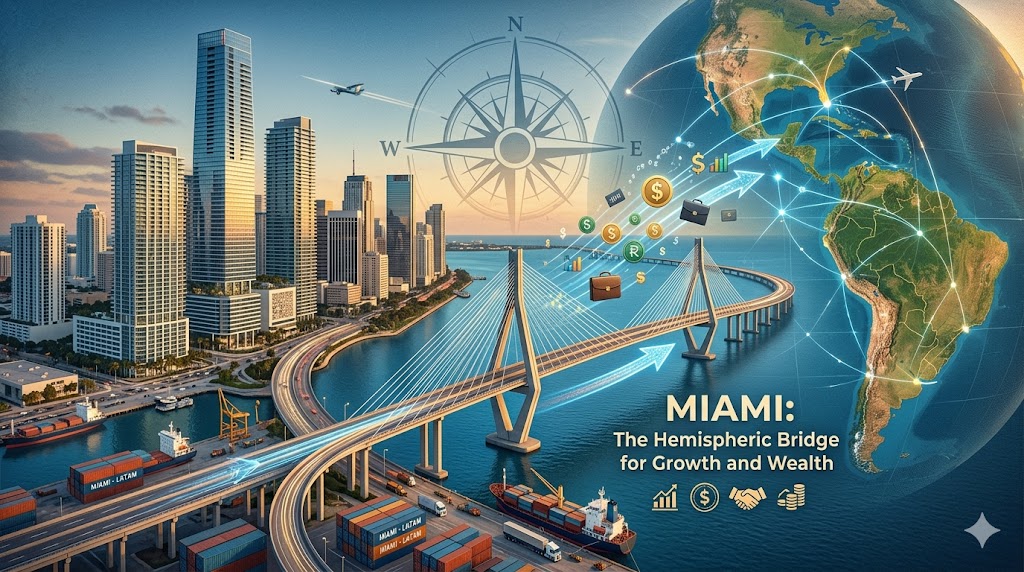
Miami’s Deep Business and Cultural Connections With South America: How a Hemispheric Bridge Produced Generational Growth and Wealth
There’s a moment that captures everything you need to understand about modern Miami.
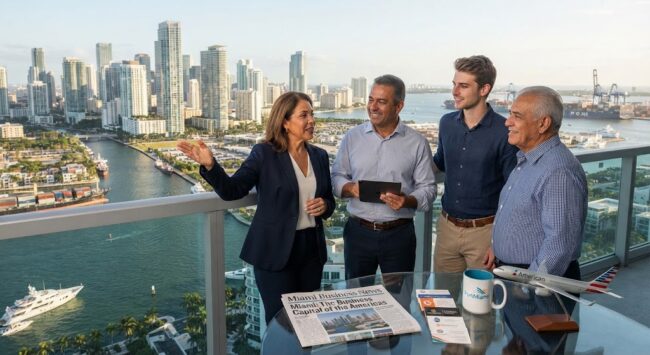
Stand in the Brickell financial district at lunch hour. Walk into one of the high-end restaurants. Listen carefully to the conversations happening at the tables around you.
You’ll hear English. You’ll hear Spanish. You’ll hear Portuguese. You’ll likely hear French Creole and possibly French. The deals being negotiated involve São Paulo, Buenos Aires, Bogotá, Caracas, Lima, Santiago, Mexico City, Panama City, and Quito as easily as they involve New York, Chicago, or Houston. The participants — bankers, attorneys, real estate developers, family office principals, technology executives, art dealers, importers, exporters — are operating in a city that functions less as the southernmost American metropolitan area and more as the de facto capital of the Americas.
That’s not marketing language. It’s economic reality. Miami has spent the last 50 years building one of the deepest, most consequential, and most economically productive business and cultural connections between the United States and South America that exists anywhere in the hemisphere — and the wealth generated by that bridge has reshaped the city, enriched a generation of South American entrepreneurs and professionals, and created a regional economy that simply doesn’t exist anywhere else in the United States.
This article walks through how Miami became the hemispheric bridge it is today, what specific business and cultural connections drive the relationship, how those connections have produced extraordinary growth for the city, how they’ve created wealth for the South American connectors who anchor them, and what the future holds for one of the most consequential US-Latin America business stories of the modern era.
How Miami Became the Hemispheric Bridge
Miami’s emergence as the gateway between the United States and South America didn’t happen by accident. It resulted from a combination of geography, history, demographics, infrastructure, and deliberate civic strategy that compounded over decades.
Geography and Climate
Miami sits at the southern tip of the United States, closer to most South American capital cities than to most American ones. Direct flights from Miami International Airport reach virtually every South American city in 4-9 hours. The shared tropical and subtropical climate creates familiar conditions for visitors and residents from across the region. The geographic positioning made Miami the natural physical bridge between the two continents long before anyone planned for it.
The Cuban Migration of the 1960s and 1970s
The mass migration of Cuban exiles fleeing the 1959 revolution fundamentally transformed Miami. Cuban professionals, business leaders, doctors, lawyers, and entrepreneurs — many arriving with significant skills and capital — built the foundation of what would become Miami’s Spanish-speaking professional and business class. By the 1970s, Miami had become a genuinely bilingual city with sophisticated infrastructure for Spanish-language commerce, media, banking, and professional services.
South American Capital Flight in the 1970s and 1980s
Throughout the 1970s and 1980s, political and economic instability across South America — military regimes, hyperinflation crises, currency collapses, expropriation fears — drove substantial capital flight from countries including Argentina, Venezuela, Colombia, and others. Much of that capital found its way to Miami, where it bought real estate, established businesses, funded family offices, and built the high-net-worth resident base that anchors the city today.
The Banking and Financial Infrastructure Buildout
Beginning in the 1970s and accelerating through the 1980s and 1990s, major US banks and increasingly international banks built sophisticated Latin American banking operations in Miami — international private banking, trade finance, correspondent banking, and wealth management services serving Latin American clients. By the 2000s, Miami had become one of the most concentrated Latin American banking centers in the world.
The Trade and Logistics Infrastructure
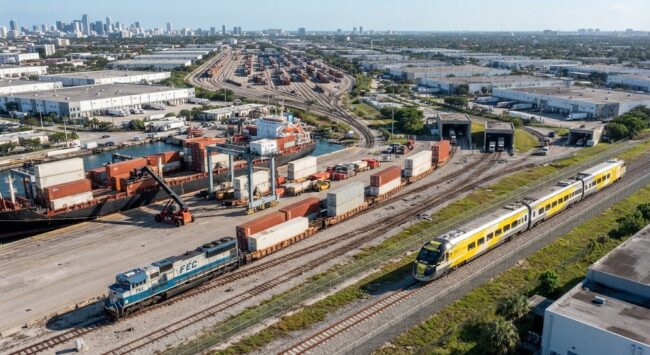
Miami International Airport became one of the busiest international cargo airports in the world, handling enormous volumes of trade between the United States and Latin America. PortMiami emerged as one of the most important cruise and cargo ports for Latin American trade. The logistics infrastructure supporting freight forwarding, customs brokerage, and trade services built up around the airport and port created economic activity worth tens of billions of dollars annually.
The Free Trade Zone and Wholesale Distribution Hub
Miami’s Free Trade Zone and the broader wholesale distribution infrastructure made the city the central node for goods flowing between US manufacturers and Latin American consumers, and increasingly for goods flowing the other direction.
The Technology and Media Bridge
Miami became the headquarters for Spanish-language broadcasting (Univision, Telemundo, and others), Latin American advertising agencies, regional headquarters for major multinational companies, and increasingly for technology companies serving Latin American markets.
The Cultural and Lifestyle Bridge
Beyond pure business, Miami built deep cultural connections — restaurants, music, art, fashion, design, sports, and a lifestyle that genuinely reflected the cultural fusion of North and South America. Art Basel Miami Beach, the explosion of Latin American art galleries, the Wynwood arts district, and dozens of other cultural institutions cemented Miami’s identity as the cultural capital of the Americas.
The Wealth Migration and Generational Compounding
By the 2010s and 2020s, the original capital flight had compounded across generations. The children and grandchildren of the original South American transplants had built businesses in Miami, established family offices, founded technology companies, anchored real estate development firms, led law firms and investment banks, and created the dense network of Spanish-speaking and Portuguese-speaking professionals that now defines the city’s business class.
The result is a city where, unlike anywhere else in the United States, the Latin American business community isn’t a niche — it’s a fundamental, dominant, and structurally embedded element of the regional economy.
Brian’s Take: Miami’s Latin American Bridge Is the Most Underappreciated American Economic Development Story of the Last 50 Years.
Most American cities spent the past 50 years competing for the same domestic businesses and the same domestic talent, but Miami quietly built a hemispheric bridge that gave it access to capital flows, talent pools, and business opportunities most American metros simply cannot reach. The wealth generated by that bridge has been extraordinary, and the city’s continued momentum in 2026 reflects 50 years of patient infrastructure building that’s now paying compounding dividends in ways most observers still underestimate.
— Brian
The Major Business Sectors Connecting Miami and South America
The Miami-South America bridge isn’t a single sector — it’s a multi-dimensional economic relationship spanning virtually every major industry. Let’s walk through the most consequential connections.
International Banking and Private Wealth Management
Miami operates as one of the most concentrated Latin American banking centers in the world, with hundreds of banks, private banks, family offices, and wealth management firms serving Latin American clients. Major institutions include:
- Major US banks with substantial Latin American private banking operations
- International private banks operating Miami offices specifically to serve Latin American wealth
- Family offices managing the wealth of South American high-net-worth families
- Specialized investment firms focusing on Latin American investment strategies, currencies, and asset classes
- Trust companies providing estate planning and asset protection services
- Independent wealth advisors serving multilingual high-net-worth clients
The wealth managed by Miami-based institutions on behalf of Latin American clients runs into the hundreds of billions of dollars — making Miami one of the most consequential offshore wealth management centers globally.
Real Estate Investment and Development
Latin American capital has been one of the most consistent drivers of Miami’s real estate market for decades. From luxury condominium purchases in Brickell and Miami Beach to commercial real estate investments to the development capital backing major projects, Latin American investors anchor a substantial portion of Miami’s real estate economy.
- Luxury residential purchases by South American buyers across Brickell, Edgewater, Miami Beach, Bal Harbour, Key Biscayne, Coral Gables, Sunny Isles Beach, and Aventura
- Commercial real estate investment in office buildings, retail, hotels, and industrial properties
- Development capital backing many of Miami’s major construction projects
- Hospitality investment in hotels, restaurants, and entertainment venues
- Land banking and long-term investment strategies
Trade and Logistics
The Miami-South America trade relationship moves enormous volumes of goods through Miami International Airport, PortMiami, and the broader logistics infrastructure:
- Air cargo moving high-value goods including pharmaceuticals, electronics, fashion, perishables, and specialty products
- Sea cargo through PortMiami serving Caribbean and South American trade routes
- Freight forwarding and customs brokerage services concentrated in the Miami metropolitan area
- Wholesale distribution for goods flowing between US manufacturers and Latin American consumers
- Re-export and free trade zone activity providing tax-advantaged trade structures
Multinational Corporate Latin American Headquarters
Miami serves as the regional headquarters for hundreds of multinational corporations operating Latin American operations. Major sectors include:
- Consumer products companies managing Latin American operations from Miami
- Pharmaceutical and healthcare companies running Latin American business units
- Technology companies managing Latin American sales, marketing, and operations
- Financial services firms anchoring Latin American business
- Media and entertainment companies producing and distributing Spanish-language content
- Manufacturing companies managing Latin American supply chains and distribution
Spanish-Language Media and Communications
Miami is the most important Spanish-language media market in the United States and arguably one of the most important in the hemisphere:
- Univision and Telemundo — major Spanish-language television networks
- Spanish-language radio stations with substantial regional reach
- Latin American advertising agencies serving multinational clients
- Music industry including major Latin music recording labels and producers
- Film and television production for Latin American markets
- Digital media and content companies serving Spanish-speaking audiences globally
Healthcare and Medical Tourism
Miami’s healthcare industry serves substantial Latin American medical tourism:
- Major hospital systems including Baptist Health, Jackson Health System, the University of Miami Health System, Memorial Healthcare, and others — all with substantial Latin American patient bases
- Specialty clinics serving wealthy Latin American patients seeking advanced medical care
- Dental, cosmetic, and elective procedure clinics serving regional patients
- Pharmaceutical and medical device distribution to Latin American markets
- Healthcare technology and innovation with Latin American applications
Legal Services
Miami hosts one of the largest concentrations of Latin America-focused legal practice in the United States:
- Major law firms with substantial Latin American practices
- Boutique firms specializing in Latin American transactions
- Immigration law practices serving Latin American clients
- International arbitration and dispute resolution firms
- Tax law practices specializing in cross-border structuring
- Estate planning attorneys serving Latin American families
Technology and Innovation
Miami’s emerging position as a Latin American technology hub has accelerated dramatically since 2020:
- Venture capital firms investing in Latin American startups from Miami
- Latin American technology companies establishing US headquarters in Miami
- US technology companies building Latin American operations from Miami
- Cryptocurrency and fintech companies serving Latin American markets
- E-commerce companies focused on Latin American consumer markets
- Educational technology serving Latin American students and professionals
Art, Culture, and Luxury Goods
The Miami-Latin America cultural connection has produced one of the most consequential art and luxury goods markets in the hemisphere:
- Art Basel Miami Beach — one of the world’s most important art fairs, with substantial Latin American collector and gallery participation
- Latin American art galleries concentrated in Wynwood and across Miami
- Auction houses with substantial Latin American collector bases
- Luxury retail including Bal Harbour Shops, the Miami Design District, and Brickell City Centre catering to Latin American shoppers
- Fashion and design industries serving Latin American consumers
- Hospitality and tourism accommodating Latin American visitors at every price point
Brian’s Take: The Density of Miami’s Latin American Business Connections Creates Network Effects Most American Cities Can’t Imagine.
When a São Paulo-based entrepreneur looks for a Miami banker, they can choose from dozens of bilingual private banking specialists who already understand Brazilian regulatory structures, currency dynamics, and family office considerations. When a Buenos Aires family seeks a Miami real estate broker, they’ll find dozens of Spanish-speaking agents with decades of experience serving Argentine clients. When a Bogotá-based exporter needs Miami legal counsel, they’ll find lawyers fluent in Colombian commercial law. That density of relationship-ready, culturally fluent, professionally sophisticated business infrastructure is exactly what makes Miami irreplaceable as the hemispheric capital — and what makes the wealth generated by these relationships compound across generations.
— Brian
How These Connections Have Produced Growth for Miami
The economic impact of Miami’s Latin American connections on the city itself has been transformational across multiple dimensions:
Population Growth
Miami’s population has been substantially driven by Latin American migration — Cuban, Venezuelan, Colombian, Argentine, Brazilian, Peruvian, and across virtually every country in the region. Greater Miami’s population now exceeds 6 million, with a substantial portion of residents either born in Latin America or descended from Latin American immigrants.
Economic Diversification
The Latin American business connection diversified Miami’s economy beyond the tourism-and-real-estate base that defined the city in earlier decades. Today, Miami’s economy spans finance, trade, healthcare, technology, professional services, media, manufacturing, hospitality, and dozens of other sectors — all enriched by Latin American business activity.
Real Estate Market Strength
Latin American capital has been one of the most consistent drivers of Miami’s real estate market for 50+ years. The current wave of supertall residential towers in Brickell, the booming luxury market in Miami Beach, and the development across Edgewater, Wynwood, and the Design District all benefit substantially from Latin American buyer participation.
Skyline Transformation
The supertall towers reshaping Miami’s skyline — Waldorf Astoria Residences, Cipriani Residences, Mandarin Oriental Residences, Aston Martin Residences, the Miami Worldcenter projects, and dozens of other major developments — depend substantially on Latin American buyers and Latin American investment capital.
Service Industry Development
The professional service industries supporting Latin American business — banking, law, accounting, real estate, hospitality, healthcare, technology — employ hundreds of thousands of professionals in Greater Miami.
Cultural Vibrancy
Beyond pure economics, the cultural vibrancy that Latin American influence has brought to Miami — the food, music, art, fashion, design, language, and lifestyle — makes the city genuinely distinctive and attractive to residents, visitors, and businesses from around the world.
Tourism Industry Strength
Latin American tourists, business travelers, and seasonal visitors anchor a substantial portion of Miami’s enormous tourism economy. The hospitality industry, retail, dining, and entertainment all benefit substantially from Latin American visitation.
Educational Institution Growth
Miami’s universities — particularly the University of Miami, Florida International University, Miami Dade College, and Nova Southeastern — have built extensive Latin American programming, served substantial Latin American student populations, and developed the bilingual professional pipelines that support continued business activity.
Infrastructure Investment
The infrastructure supporting Miami-Latin America business — Miami International Airport (one of the busiest international cargo airports in the world), PortMiami, the highway system, and increasingly the Brightline rail expansion — has been substantially driven by demand related to Latin American commerce.
Technology and Innovation Hub Emergence
Miami’s recent emergence as a technology and innovation hub has been substantially driven by Latin American business activity — venture capital flowing into Latin American startups, technology companies establishing operations to serve Latin American markets, and the broader fintech and crypto activity connecting the United States to Latin American economies.
How These Connections Have Created Wealth for South American Connectors
Equally important — though less often discussed — is how Miami’s hemispheric bridge has created enormous wealth for the South American entrepreneurs, professionals, families, and businesses who built the relationships that made the bridge work.
Generational Wealth for Founding Families
The South American families who arrived in Miami during the various migration waves of the 1960s through the 1990s — and who built the businesses, real estate portfolios, and family offices that anchor the city’s Latin American business community today — have generally built substantial generational wealth. The compounding of decades of Miami real estate appreciation, business equity, investment portfolios, and entrepreneurial success has produced family wealth measured in tens or hundreds of millions of dollars in many cases.
Wealth Creation Through Real Estate
South American investors who bought Miami real estate during the 1970s, 1980s, 1990s, and 2000s have generally seen extraordinary returns — both through property appreciation and through development opportunities. Many South American family offices and investors have built substantial portions of their net worth through Miami real estate.
Business Equity and Entrepreneurial Wealth
South American entrepreneurs who founded businesses serving the Miami-Latin America trade have built substantial businesses worth tens or hundreds of millions of dollars in many cases. Import-export companies, distribution businesses, professional services firms, technology companies, hospitality ventures, and dozens of other business categories have produced significant equity wealth for their founders.
Career Wealth for Professionals
The professional class serving Latin American business in Miami — bankers, attorneys, accountants, real estate brokers, wealth managers, consultants, executives — has built substantial career wealth through the high incomes, equity compensation, and accumulated savings these professions support.
Currency and Investment Wealth
For South American families dealing with home-country currency volatility, hyperinflation, and political risk, Miami-based US dollar assets have provided protection and growth that home-country investments could not match. The currency and investment wealth created by this US dollar exposure — through real estate, securities, business equity, and family office investments — has been transformational for many South American families.
Educational and Generational Investment
Miami’s higher education infrastructure has provided high-quality bilingual education for the children of South American business families — producing the next generation of Latin American business leaders who continue building the bridge their parents and grandparents established.
Network and Relationship Capital
Beyond pure financial wealth, the South American connectors who built Miami’s hemispheric bridge have accumulated extraordinary network capital — relationships across industries, governments, families, and institutions that compound into business opportunities for generations.
Cultural and Lifestyle Wealth
The lifestyle wealth Miami offers to South American residents and seasonal visitors — climate, hospitality, cultural amenities, healthcare, education, security — represents quality-of-life value that’s hard to quantify but enormously meaningful.
Brian’s Take: The Wealth Created by Miami’s Hemispheric Bridge Spans Generations and Will Compound for Decades to Come.
The South American families who built Miami over the past 50 years — through real estate investment, business creation, professional services, and cultural participation — built generational wealth that very few other places in the world could have produced. That wealth now anchors the next generation of Miami business activity, funds the venture capital flowing to Latin American startups, supports the philanthropic and cultural institutions that distinguish the city, and creates the family office infrastructure that will keep Miami as the hemispheric capital for at least another 50 years. Few American economic stories of the late 20th and early 21st centuries match the wealth creation that Miami’s Latin American bridge has generated.
— Brian
The Cultural Dimensions That Underpin the Business Relationship
Pure business explanations of Miami’s success miss something important. The Miami-South America relationship works as well as it does because the cultural fluency between the two regions is genuinely deep — not superficial.
Bilingual and Multilingual Reality
Miami genuinely operates in Spanish, English, and Portuguese — with substantial French Creole and other language presence. This isn’t ceremonial. Business, government, healthcare, education, media, and daily life function fluently across multiple languages.
Food and Culinary Integration
Miami’s restaurant scene blends American, Cuban, Argentine, Peruvian, Brazilian, Colombian, Venezuelan, Mexican, and other Latin American cuisines into something genuinely hybrid. Cuban sandwiches, Argentine steakhouses, Peruvian ceviche restaurants, Brazilian churrascarias, and dozens of other concepts coexist as parts of the everyday city.
Music and Entertainment
Miami is one of the most consequential Latin music capitals in the world, hosting major recording studios, distribution companies, and a thriving live music scene that crosses Spanish, Portuguese, and English markets fluidly.
Art and Design
Art Basel Miami Beach, the explosion of Latin American galleries, the Wynwood arts district, and the broader Miami art ecosystem function as one of the most important Latin American art markets globally.
Sports and Recreation
Soccer, baseball, basketball, golf, tennis, and water sports all bring substantial Latin American participation. Inter Miami CF’s signing of Lionel Messi cemented the city’s role as a Latin American sports capital.
Family and Social Networks
The family-centered social structures common across Latin American culture have shaped Miami’s neighborhoods, schools, religious institutions, and social organizations in ways that genuinely reflect hemispheric integration.
Religious and Spiritual Life
Miami’s Catholic, Jewish, Protestant, and other religious communities reflect the diverse spiritual traditions Latin Americans bring to the region, producing institutional infrastructure that serves the regional population authentically.
Education and Bilingual Schools
Miami’s network of bilingual schools — public, charter, and private — produces generations of bilingual graduates equipped for careers spanning both regions.
The cultural dimensions matter because they produce the trust, the relationships, the ease of doing business that pure infrastructure cannot manufacture. Latin American families bringing their wealth, businesses, and futures to Miami aren’t just choosing a financial center — they’re choosing a city where they can genuinely live their lives.
What’s Coming Next: The Future of the Miami-South America Bridge
The Miami-South America relationship continues evolving, with several major trends shaping the next decade:
Continued Wealth Migration
Political and economic instability across various South American countries continues driving wealth migration to Miami. Argentina’s ongoing economic challenges, Venezuela’s continued crisis, periodic instability across the region, and concerns about future political directions in multiple countries continue producing capital flows into Miami real estate, family offices, and businesses.
Technology and Fintech Acceleration
The technology and fintech connections between Miami and Latin America have accelerated dramatically since 2020. Cryptocurrency adoption across Latin American economies, remittance technology, payments infrastructure, e-commerce platforms, and educational technology all anchor Miami’s growing role as a Latin American technology hub.
Generational Transition in Founding Families
The original families who built Miami’s Latin American business community 30-50 years ago are increasingly transitioning leadership to second and third generations — many of whom are even more deeply integrated into both Miami and home-country business than their parents. This generational transition is creating new family office infrastructure, new venture capital strategies, and new business opportunities.
Expanding Brazilian Presence
While Spanish-speaking Latin American countries have historically dominated Miami’s Latin American business presence, Brazilian engagement has accelerated substantially over the past decade. Brazilian high-net-worth families, businesses, and professionals are increasingly anchoring Miami operations and contributing substantially to the city’s hemispheric character.
Continued Real Estate Investment
Latin American capital continues anchoring Miami real estate through both luxury residential purchases and major development investments. The current wave of supertall towers, the expansion of luxury condominium markets across the broader metro, and major commercial developments all reflect continued Latin American investment confidence.
Growing Educational Connections
Miami’s universities continue building Latin American programming — substantial Latin American student populations, joint degree programs with Latin American universities, executive education for Latin American business leaders, and research partnerships across the hemisphere.
Infrastructure Investment
Continued investment in Miami International Airport, PortMiami, the Brightline rail expansion, and other infrastructure supporting hemispheric commerce ensures that the physical bridge between Miami and Latin America remains world-class.
Geopolitical Considerations
Ongoing geopolitical considerations — US-China competition, Russian influence in Latin America, Cuban relations, Venezuelan crisis evolution, Mexican economic dynamics — all create both challenges and opportunities for the Miami-Latin America bridge. Miami’s role as a stable, US-anchored, dollar-denominated, English-and-Spanish-fluent business center positions the city to benefit from many of these geopolitical dynamics.
Brian’s Take: The Miami-South America Bridge Will Continue Producing Wealth and Growth for at Least Another 50 Years.
The infrastructure, relationships, cultural integration, and generational wealth that Miami has built around its Latin American business connections aren’t going away — they’re compounding. The next 50 years of US-Latin America business will continue flowing through Miami at rates that no other American city can match, and the wealth created by that flow will continue accumulating for the families, professionals, and businesses positioned to participate. For South American entrepreneurs and professionals considering where to anchor their futures, Miami remains one of the most strategically valuable choices available anywhere in the hemisphere.
— Brian
The Bottom Line: A Hemispheric Capital Built Across 50 Years
Miami’s deep business and cultural connections with South America represent one of the most consequential American economic development stories of the past 50 years. What began with Cuban exile migration in the 1960s expanded into capital flight from across South America in the 1970s and 1980s, evolved into sophisticated banking and trade infrastructure in the 1990s, deepened into multinational corporate presence and cultural integration in the 2000s, and has now matured into one of the most genuinely integrated US-Latin America economic relationships anywhere in the hemisphere.
The growth this bridge has produced for Miami is extraordinary — population expansion, economic diversification, real estate market strength, cultural vibrancy, infrastructure development, educational growth, and the emergence of a metropolitan area that genuinely competes with major global cities for capital, talent, and business activity.
The wealth this bridge has created for the South American entrepreneurs, professionals, and families who anchored it is equally remarkable — generational family wealth, business equity, real estate fortunes, professional career success, and the network capital that compounds across decades.
The cultural integration that underpins the business relationship is genuinely deep — bilingual everyday life, integrated cuisine and music, fluid art and design markets, sports participation, family and social networks, religious and educational institutions, and the kind of authentic cultural fluency that pure infrastructure cannot manufacture.
For South American entrepreneurs, professionals, and families considering where to anchor their futures, Miami remains one of the most strategically valuable choices available — offering US-dollar economic stability, sophisticated business infrastructure, deep cultural integration, world-class quality of life, and the kind of network density that creates business opportunities across generations.
For Miami residents, civic leaders, and businesses, the Latin American connection represents the foundation upon which the city’s continued growth depends. Protecting, deepening, and extending the relationships that built modern Miami should remain one of the highest civic priorities for the decades ahead.
For the broader story of the Americas, Miami’s role as the hemispheric bridge represents one of the most successful examples of cross-border economic integration anywhere in the world — proving that geography, culture, capital, and infrastructure can combine to produce shared prosperity that transcends national boundaries.
The supertall towers continue rising. The capital continues flowing. The languages continue blending. The cultures continue integrating. The wealth continues compounding. The relationships continue deepening across generations.
Miami has spent 50 years becoming the capital of the Americas. The next 50 years promise to deepen that role even further — generating continued growth for the city, continued wealth for the South American families who built it, and continued evidence that hemispheric integration, when built thoughtfully across decades, produces extraordinary prosperity for everyone involved.
That’s the Miami-South America story.
That’s a Florida and hemispheric story worth knowing — and worth participating in.
Resources & Further Reading
- Miami-Dade Beacon Council — Miami-Dade County’s official economic development organization with extensive resources on the regional economy, international business, and industry sectors.
- Greater Miami Convention & Visitors Bureau — Official destination marketing organization with resources on Miami’s tourism, hospitality, and international visitor economy.
- Miami International Airport — Official website for one of the busiest international cargo airports in the world and the primary aviation gateway between the United States and Latin America.
- PortMiami — Official website for Miami-Dade County’s port serving substantial Caribbean and South American cruise and cargo operations.
- University of Miami Center for Hemispheric Policy — Academic center providing research and analysis on US-Latin America relations and hemispheric business issues.
- FIU Latin American and Caribbean Center — Florida International University’s research and academic center focused on Latin American and Caribbean studies.
- Brickell City Centre and Miami Worldcenter — Major mixed-use developments anchoring Miami’s continued growth as a hemispheric business capital.
About the Author